

On Sunday, October 18, I crossed the finish line of the Columbus Half Marathon with a 14-minute PR.
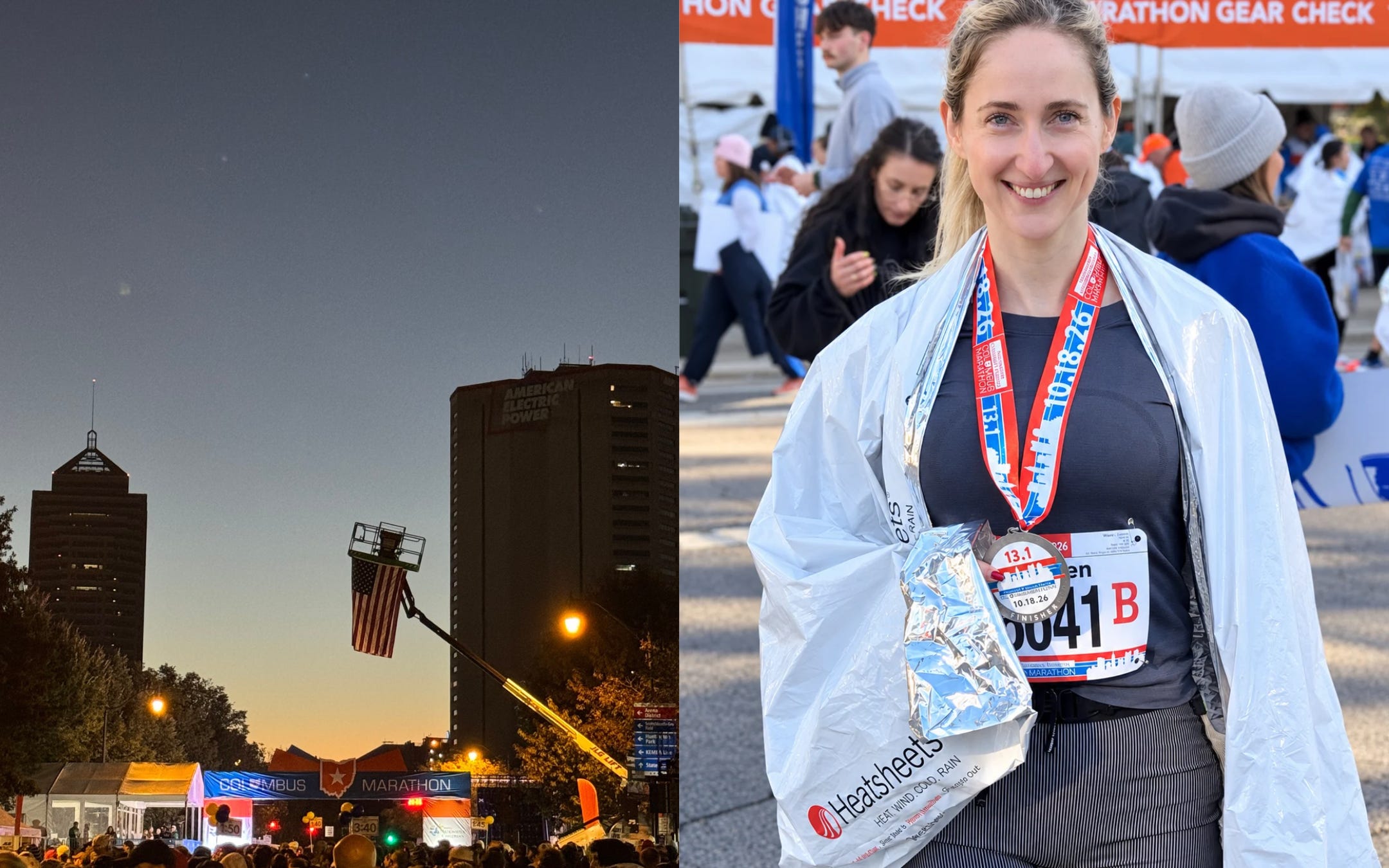
I didn’t hire a coach. Someday I probably will, but I’d like to see how far my current AI training system can take me first. I didn’t run 50-mile weeks; my biggest week was 25 miles. What I had was a system: a training plan, a steady stream of data from my Garmin, and an AI I talked to almost every day about all of it.
AI took the thinking load off: the planning, the interpreting, the adjusting, in a way that felt personalized to my goals and running history. Here’s exactly how I used it.
Why I used AI instead of a running app-generated plan
Running apps had served me well. Their plans built a solid base for my first races. But this time I had a specific goal, reflections on previous plans and races, and a recent IT band injury. A template can’t take all of those things into account. Some workout choices felt random; others felt too aggressive.
What I wanted was a plan built from my actual training history: one that could explain its reasoning, and change when I pushed back. So I built it with Claude.
1. A plan built from my own history
It didn’t start from scratch. I exported a summer of Garmin Activities as a .csv and uploaded it to Claude. In went screenshots of my old training plans from Google Sheets, my past race results, and an app-generated plan, annotated with my notes.
That gave Claude a real baseline for my fitness. Together we reshaped the plan around my goal and my gaps: more threshold work, fewer short intervals, and some workouts built into my long runs.
2. Feedback on every workout
After each run, I sent screenshots from my Garmin app and a note on how the workout felt. Back came a read on whether I’d hit the session’s purpose, and what to adjust next. It also gave me heat-adjusted pace ranges for every workout, which was critical for a summer block.
3. Checkpoints instead of vibes
We built time trials into the plan, with clear “if this, then that” rules set in advance. The results of those time trials moved my race paces by rule, not by feel.
4. Making sense of my Garmin
Resting heart rate, heart rate zones, lactate threshold, the race predictor: my watch has a lot of data. Claude helped me understand what each metric means, how much to trust it, and what to do when one looks off, like a resting heart rate creeping up before illness strikes.
5. Adjustments for when I was sick
When I got sick a week before the race, Claude helped me scale back, or skip, my final workouts day by day so I could make it to the start line healthy.
6. Carb-loading math + grocery lists
Carb loading sounds simple, but I’d never quite hit my targets in the past. Claude worked out the numbers specific to me, built a two-day plan around foods I actually like, and kept a running tally as I ate, suggesting what else to eat to close the gap. It’s all stored in Claude’s memory now, so I won’t start from scratch next race.
7. Race day pace plan
In the past, I never really knew what my race pace should be. I’d estimate it from how my long runs were trending, and run it by feel, starting conservatively for the first few miles.
This time, Claude built the plan from my actual training: a pace band for each phase of the race, and heart-rate ranges that told me when to back off. The plan pointed to about 1:58. I ran 1:58:20.
8. The post-race retro
The Product Manager in me needed a retro while the race was still fresh in my mind. I sent Claude my splits, heart rate, fueling, and how I felt throughout the race to determine what went well, and what to change next time.
9. Planning what’s next
No rest for the wicked: the next day, I turned those lessons into next year’s plan. Claude helped structure my goals, a training calendar, and a race schedule, all in one sitting.
I’m running NYRR’s 9+1 program next year (nine races plus a volunteer shift earns a guaranteed entry to the 2028 NYC Marathon), so Claude is helping me prioritize the races that fit my training goals and reshape my weekly plans around them.
Steal My System
I keep one “Running” project in Claude with a living “training context” doc: my races, goal, injury history, heart rate zones, and the fueling that works for me. Claude keeps this up to date, so each conversation starts already knowing me.
Prompts to start with:
“Here’s my training history [attach a Garmin CSV export if you have one], my past training plans, and my race results. I’m training for [race] on [date], goal time [X]. I’m also attaching a plan I’m considering, with my notes on it. Build me a plan around my goal, with checkpoints that tell me whether the goal is realistic. Explain your reasoning, and flag anything you’d push back on.”
“[Attach Garmin screenshots: total time, average pace, average heart rate, plus the pace, heart rate, and elevation charts.] This run was supposed to be [threshold / easy / long]. Did I execute what it was meant to do? How it felt: [a sentence or two]. Should anything change for the rest of this week, and if so, what, and why?”
“I race on Sunday. I weigh [X]. How many grams of carbs per day should I target and how did you get that number? How many days should I carb load? Build me a carb load plan around foods I actually like [list a few], all familiar and low-fiber. Please also build me a grocery list. Then keep a running tally as I tell you what I eat, and adjust what’s left based on the hours remaining in my day.”
“Build my pacing plan for [race] on [date]. Base it on this training cycle: the plan, my checkpoint results, and where my fitness actually landed, not on my goal time alone. Break the race into phases, with a pace band and a heart-rate range for each phase, accounting for the course elevation. Give me clear rules for when to back off and when I can press.”
“Here are my lap splits and heart rates from the race, plus my fueling [what and when] and how I felt at each stage [notes, including any issues]. Compare it against our race plan: what went right, what didn’t, and why? Then turn it into specific changes for my next training cycle.”
What AI didn’t do
I never use AI to replace a doctor or physical therapist. When something doesn’t feel right, I go get it checked out.
It didn’t overrule me. I pushed the plan through 12 iterations to accommodate certain aspects I wanted (a 3-week taper, 11 miles as my longest run, etc.)
A quick disclaimer: I’m not a coach, a doctor, or a dietitian. This is what worked for my body, my injury history, and my goal. I still made tweaks to the plan based on what I was comfortable with, and pressed the AI to share its research frequently when I wanted evidence of its decisions.
Five stars!!⭐️ ⭐️ ⭐️ ⭐️ ⭐️ You are beautiful, brilliant and inspiring !!! Congratulations on your huge PR!!💕✨💕✨